

We Move Together
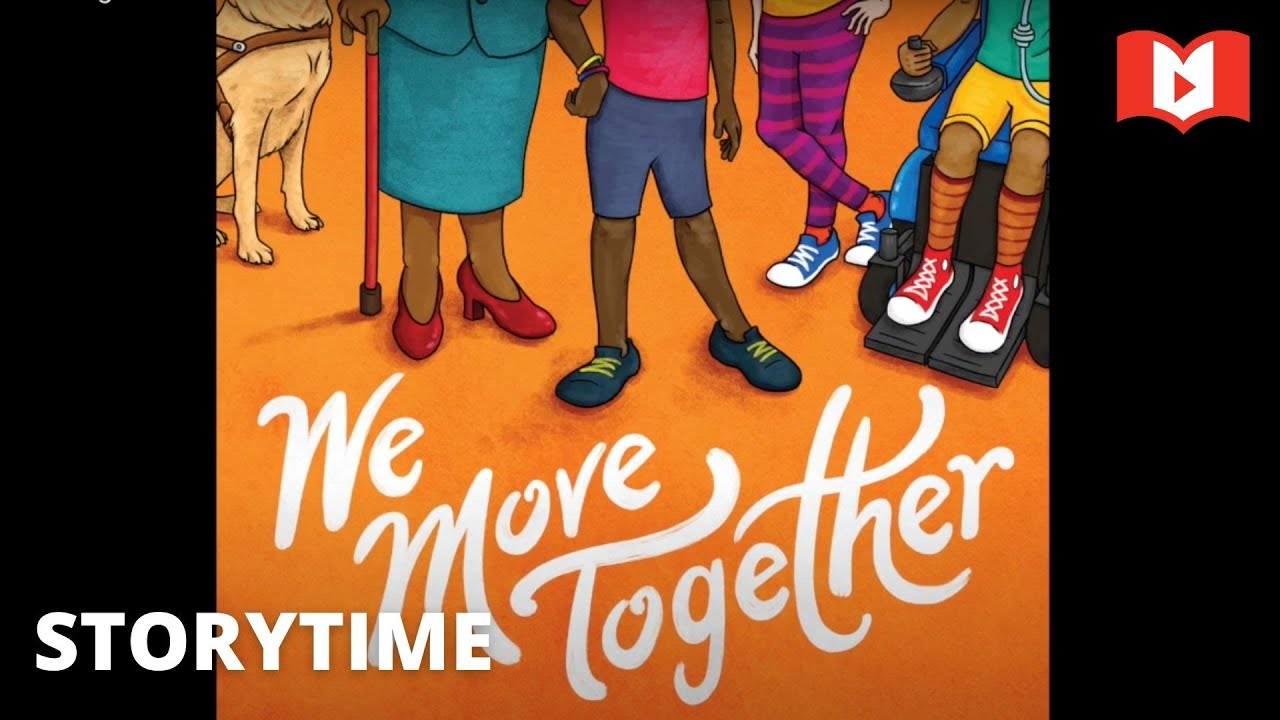
We Move Together is a story about community, connection, and how people navigate the spaces around them. It follows a group of individuals with disabilities who apply creative thinking to daily challenges. Their adventures highlight the strength, joy, and collective spirit found within the disability community and that communities can work together to create spaces where everyone can participate, contribute, and belong.
Other versions of this Story:
Below are some activities connected to this story and the concept of movement that can be done at home.
Retell the Story
- What happened first, next, then and finally in the story?
- What happened in the beginning? Middle? End?
Reflective Questions
Here are some questions you can answer. You can pick one, multiple or all of them. You can also respond in different ways(orally, writing, drawing pictures, voice notes, etc.)
- What did you notice in the story that made it easier for everyone to move together?
- How did the characters help each other, and why do you think that mattered?
- Have you ever seen something in your community that felt unfair or hard for someone to use? What could be changed to make it better for everyone?
- How does working together make a community stronger?
- What does “moving together” mean to you?
Sentence Writing
- Choose a page and pause the video on that page.
- List all the objects, actions and descriptive words.
- Create sentences using the list of words.
Story Writing
Create a story of “Moving Together”. The story can be drawn, written, recorded orally, or photographed of scenes created with figures and objects at home.
- Imagine you are in the story.
- Select a location in the story.
- How will you get there?
- What might you see and/or hear on the way?
- What forms of communication might you observe and hear?
- What is a problem in your story?
- How is the problem solved?
Stop the video on a page and complete the following activities:
- Estimate and then count the number of people? Colours? Specific objects? (i.e. books on a bookshelf). Consider grouping objects and counting by 2s, 3s, 4s, 5s, etc. After counting forward, try counting backwards.
- Choose a number counted. How can that number be represented using tangible objects (something you can touch and feel), symbols, words or pictures? Repeat with a different number.
- Create and solve math problems using the numbers from counting above with various mathematics operations (addition, subtraction, multiplication, division). For example:
- There are 8 friends and 4 friends join the group, how many are there now? (8 + 4 = ?)
- There 4 groups of 3 people, how many are there? (4 x 3 = ?)
- Draw on paper and/or indicate using gestures, directions and movements (i.e. left, right, forward, back)
- Choose a specific object, area/room indoors or outdoors, to move to (i.e. kitchen, sofa, etc.)
- Describe, using pictures, words, numbers, or gestures, how someone can get there? (i.e. move forward 2 steps, turn left, turn right, etc),
- When you arrive at the object or location, measure the specific object or something in the room. You can measure using non-standard units by selecting another object as the tool to measure (i.e. the sofa is 22 socks wide) or standard units (millimeters, centimeters, meters) use a tape measure or ruler.
- Explore the perimeter, area or volume of an object using non-standard units. Examples:
- Use a water bottle to measure the perimeter of the carpet
- Use magnetic tiles or sticky notes to determine the area of a desk or small table
- Use mini marshmallows to determine the volume of a jar
- Make a list of all the things that make you who you are. Here are some examples of things you may want to include:
- Strengths, Gifts, Talents
- Disability
- Race
- Family
- Culture
- Community
- Interests/Hobbies
- Create a Map of You:
- Begin by writing your name, drawing a picture of yourself or selecting an object that represents you, and placing in the middle of a paper
- Use words, pictures, and/or symbols to represent the things you have listed on the paper.
- Write short phrases or sentences. “I love to, I live in, I am a member of…”
- Try using different colours to represent different categories (i.e. blue is my family; yellow are my strengths, etc)
- Choose a movement or exercise you enjoy
- Decide on something to represent ‘green’ light and ‘red’ light - green/red marker or papers, digital image of traffic light and/or orally saying the words
- When green is communicated, do the movement
- When red is communicated, freeze/stop
- Repeat with different movements
Materials
- Medium to large size plastic bowl or cup
- Plastic wrap
- Rubber band
- Salt, rice, or sugar
- Device with a speaker (phone, portable speaker, tablet, etc)
Directions
- Tightly stretch the plastic wrap over the opening of the bowl and secure it with the rubber band if required. The plastic wrap needs to be pulled tight.
- Add a thin layer of either salt, rice, or sugar onto the center of the plastic wrap. These tiny particles will be the indicators of movement.
- Place the sound device, speaker-side down, directly onto the plastic wrap near the center, but without touching the salt, rice or sugar. The direct contact is important for transferring the vibration.
- Play music or sound on the device. A song with a strong bass will have the greatest effect.
- Observe the motion and try a different sound.
After:
- What did you observe or feel? Did the salt, sugar or rice move? How?
- Draw a picture and/or retell what you saw?
Materials
- Zippable plastic bags (optional for less mess); plastic plates or bowls
- Slimy or sticky materials like shaving cream, hand lotion, hair gel, mustard, relish, ketchup, honey, syrup, jam, etc.
- Food colouring (optional)
Directions
- Gather 1-4 plastic bowls or zippable plastic bags.
- Add a different substance into each bowl/bag.
- Add food colouring to change the colour and increase visual appearance (optional)
- Make different movements like pat, drum, squeeze, make lines (1 or more fingers), etc. Focus on fine motor movements and/or visual-motor integration.
- Hide small items in the substance that have to be located through touching and/or looking.
- Create a story with different objects to add to the sensory fun.
- Example: Phoebe the tiny pebble tumbled into the bag of blue mud and found herself instantly stuck. Two brave finger heroes appeared outside the bag and used a pushing movement to create a clear path through the mud. Following the gentle line, Phoebe safely rolled to the edge, learning that moving together can overcome any sticky barrier.