On this Page
- 2026 Children's Mental Health Week
- Related Videos
2026 Children's Mental Health Week
Each year, Ontarians mark the first full week of May as Children's Mental Health Week. This important week is about:
- Increasing awareness of the signs of child and youth mental health problems
- Decreasing stigma
- Understanding that help is available and it works!
For more information on Children’s’ Mental Health Week please see CMHA Mental Health Week. In recognition of Children’s Mental Health Awareness Week 2026, we hope to highlight the importance of small and intentional actions that can support mental health.
The information and resources below has been created to complement your existing routines and at-home wellness practices. We collaborated with the York Region Public Health Healthy Schools team to create a resource that we hope will create opportunities for joy and wellness. Be sure to also check out our Student Mental Health and Addictions Newsletter for additional resources.
The YRDSB Student Mental Health and Addictions Strategy highlights a holistic approach to Mental Health including many factors, but not limited to, mental and physical health. How we think and feel about ourselves and the world can directly impact our physical and mental health. To care for ourselves, our children and our families, we must center and incorporate wellness and health practices that speak to who we are and our identity. There are many ways to be healthy and promote mental health. This toolkit aims to provide resources and opportunities that support positive mental health through small and intentional actions.
We encourage you to use the hashtags below to share how your family is acknowledging Children’s Mental Health Awareness Week or using the toolkit:
#withinbetweenaround, #YRDSB, #CMHAW2026 #MHYRDSB, Share with us on Instagram @MH_YRDSB
Date and Time | Presentation Topic | Registration/ Access Links |
|---|---|---|
Wednesday May 6th, 2026 6:30 p.m. - 7:30 p.m. | Social Media & Mental Health Presented by YRDSB”s Central Mental Health Team. Some topics covered in this live virtual presentation include understanding what social media is, the risks and benefits of social media use, some strategies to help youth manage their social media use, teens’ sense of agency, PPM 128 and resources. There will be time for questions and answers at the end of the presentation. | |
Recorded/On Demand YRDSB Learning About Mental health Presentation Series (LAMPS)
Access at a time that is best for you! | Supporting Emotional Regulation at Home and at School for Caregivers of Kindergarten Students This on-demand presentation shares ways caregivers can support coregulation, transitions, social skills, communication, and collaboration with their Kindergarten aged child(ren). | |
Anxiety in School-Aged Youth This on-demand presentation covers "What is anxiety", signs and symptoms in your children, coping skills to build, and provides resources for further support. | ||
Technology and Mental Health |
Organization | Presentation Topic | Time and Location | Registration/ Access Links |
Conversations about Body Image Part of the Supporting Your Child’s Well-being: Free webinars for parents and caregivers | May 7, 2026 - 7:00 p.m. - 8:00 p.m. | ||
Kinark | Parenting Your Anxious Child This virtual presentation explores key areas that are discussed and include ‘what is anxiety and why do we get anxious?’, when anxiety becomes a problem, and how to coach and support a child who is anxious. | Recorded/On Demand Access at a time that is best for you! |
There are five themes supported by ready-to-use activities that can be practiced at home and in other environments. These activities promote positive mental health through small and intentional actions while promoting the YRDSB Mental Health and Addictions Strategy actions: Within, Between & Around Us. Each theme and resources can be modified to fit the needs of you and your circle of care or family.
Helpful considerations include:
- Consider how these resources may fit into your day-to-day routines or help create new ones
- Make these resources your own. Use what works on the days that best fit. For example, if a resource for Wednesday better suits Monday, then use it on Monday.
Mindful Mondays | Resources to Explore | Conversation Starters |
During Mindful Mondays; we invite you to do One Small Thing - practice being mindful or in the moment. Slow things down by pausing, reflecting and being present in the moment. Being mindful looks different for each of us. | Mindfulness from the Canadian Mental Health Association Being mindful can be as simple as listening. Try this Just Listen activity from School Mental Health Ontario. Follow the prompts and just listen!
| Tip sheet on Conversation Starters about Mental Health from School Mental Health Ontario |
Thoughtful Tuesdays | Resources to Explore | Conversation Starters |
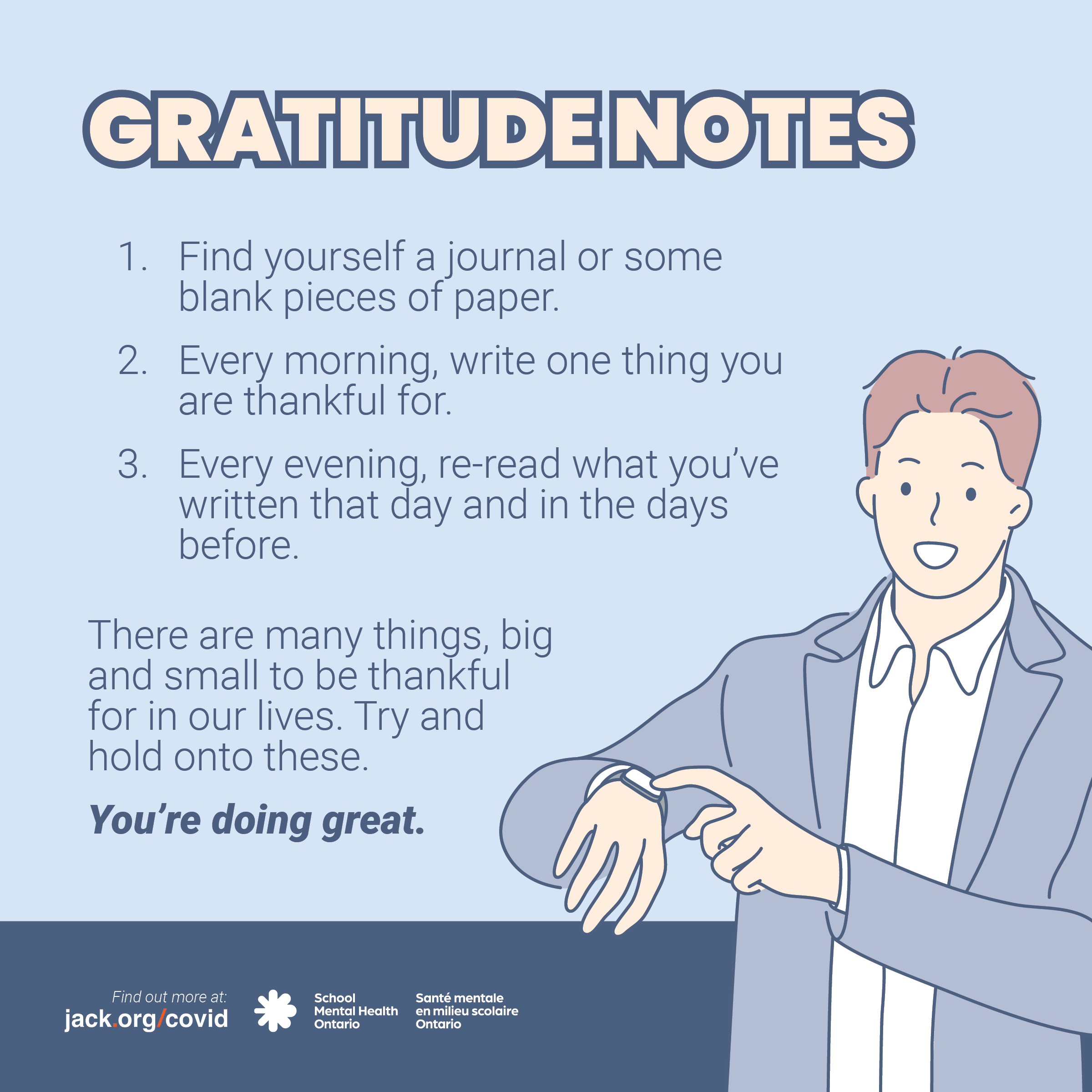
Thoughtful Tuesdays invite us to be thoughtful about gratitude. Taking the time to remember the everyday things we have to be grateful for can help boost our mood! We all have different things and people to be grateful for and will practice gratitude in different ways. | Gratitude activities from School Mental Health Ontario. Try doing these activities together as a family! Try this gratitude activity: Gratitude Notes
| Spreading Gratitude provides a conversation starter when speaking to your child(ren) about gratitude
|
Wellness Wednesdays | Resources to Explore | Conversation Starters |
Wellness Wednesdays invite us to consider what helps us feel well. Wellness looks different for each of us. Our wellness can be connected to who we are and the things we enjoy. It can also be connected to our experiences, culture, beliefs and many other pieces that shape our identity. Engaging in activities that connect mind and body is a great way to enhance the wellness of all children and youth. | Exercise video for kids. You can follow along with all of the video or just some of it. Five minute boxing fitness for teens. Stretch in your Chair. There are many ways to move your body like from a seated position. Try these together as a family! | A conversation starter to encourage wellness movement and breaks - Muscle Relaxation Exercises
|
Take Care Thursdays | Resources to Explore | Conversation Starters |
|---|---|---|
Take Care Thursdays invites us to consider how we take care of ourselves and those around us. Taking moments each day to take care of ourselves and each other is important. Equipping ourselves and our child(ren) with the tools needed to Take Care and enhance positive mental health can be a great way to promote overall wellness. Self-care looks different for everyone! Supportive Resources: | Self-care tips from other youth Self-care checklist from Kids Help Phone | Why Self-Care? - This resource can be used as a conversation starter to help your child(ren) think about why self-care is important and some ways we may practice self-care. |
Focus Fridays | Resources to Explore | Conversation Starters |
|---|---|---|
Focus Fridays invites us to pause and reflect. Considering situations in an intentional way can offer insight and clarity. Consider the following reflection questions to share with your child(ren).
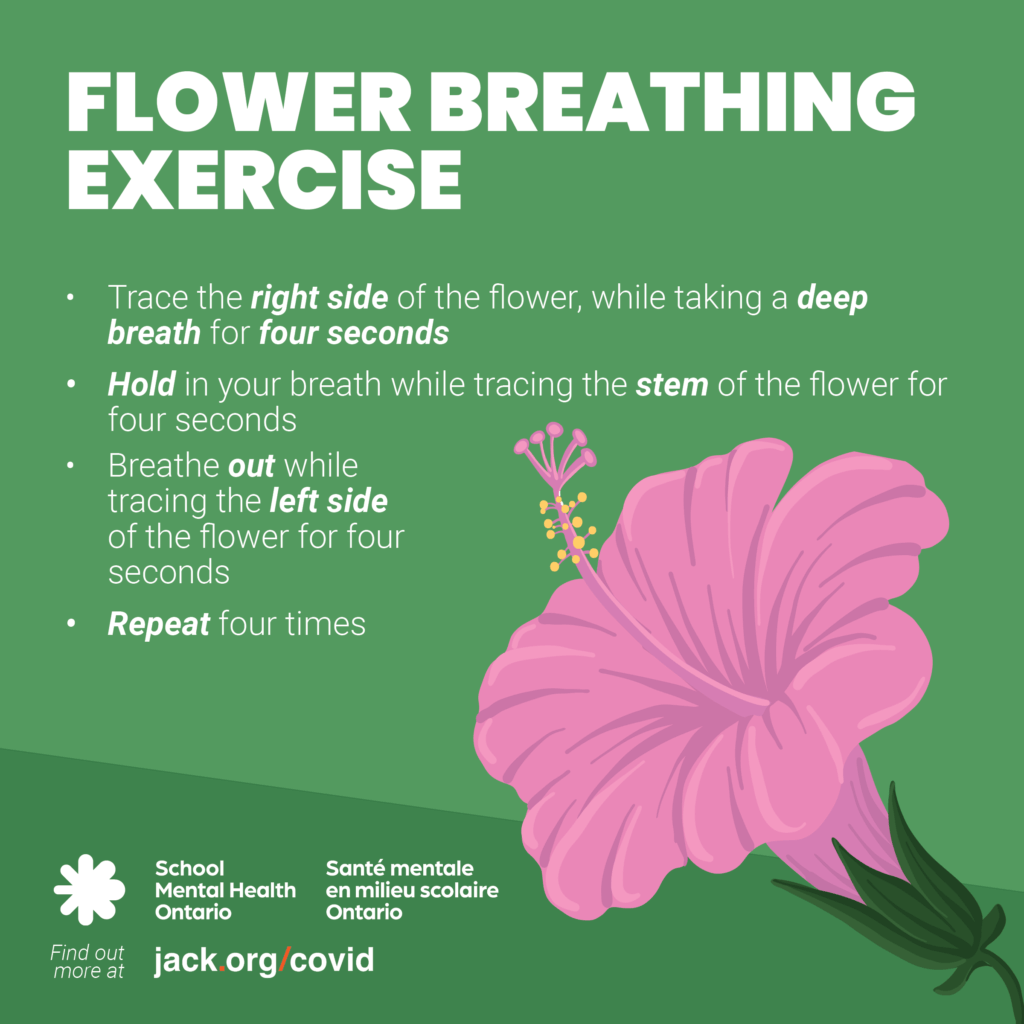
| Guided reflection meditation for kids Meditation for teens on taking a moment to notice their thoughts | Flower Breathing Exercisehttps://smho-smso.ca/wp-content/uploads/2021/02/4-Flower-Breathing-1024x1024.png can provide a conversation starter to help your child(ren) explore how they might practice re-focusing. Listen to the YRDSB Podcast on Social Media and Mental Health with your teen and have a conversation about social media. |
Looking for Additional Resources?
Check out School Mental Health Ontario’s By Your Side Toolkit for Parents/and Caregivers. The toolkit features resources on topics:
- Understanding mental health
- Mental health at home
- Stress and anxiety management
- Substance use prevention
- Navigating digital technology
- Reaching out for help
Please contact us with any questions at mental.health@yrdsb.ca
Anything that helps you to feel positive and hopeful!
Here is some examples of small things shared by students and parents:
- “When my daughter shares funny videos with me after work” - Parent
- “Being brave when I feel nervous” - Student
- “Taking homemade lunches to school ” - Student
- “Feeling accepted” - Student
- “My family & friends” - Student
Many identities, languages and expressions of wellness are missing, how do you and your family express Within, Between & Around (holistic mental health)?
Share with us on social media @MH_YRDSB (Instagram)
Within Between & Around in action through the ABCs of Mental Health
- Within, Between and Around factors can include the relationships we have with others that support our mental health. Meaningful relationships and conversations can improve your child’s mental health and create a sense of value in knowing that they are heard, listened to and acknowledged.
- Bridge: The qualities “Within” us can include our gifts, strengths and assets. Noticing and acknowledging your child’s strengths tells them they are valued. For example, you could say: "I noticed you really tried with your homework,” or “I love the way you think outside the box! You are so creative!”
- Connection: A simple check-in can build connections and support positive mental health: "How was your day?", "What was the highlight of your day?", "You seem quiet. Is everything okay?” Checking in regarding what’s happening “Around” your child can help inform what kinds of questions or support they may need. For example: “Exams are coming up, how are you feeling about that?”.
Related Videos