



Starting Kindergarten is a big step. It is normal to feel excited, nervous or somewhere in between.
We are here to support. Our goal is to help your child feel safe, welcomed and excited to learn in ways that honour who they are.

What to Expect in Kindergarten
Kindergarten is for all children. Our classrooms are warm, caring and welcoming spaces where children learn through play and exploration.
Visit our Kindergarten pages to learn more about:

Your Roadmap to Kindergarten
Use the tabs below to explore how to prepare your child for Kindergarten.
Registration for Kindergarten opens in January. Unsure where to register? Use the school locator to find your home school.
For families with Early Intervention Services (EIS):
Families may choose to attend the YRDSB and Early Intervention Services (EIS) Family Information Night.
Families may choose to attend a Kindergarten Information Session to receive information about the program, ask questions and connect with the school.
Check with your school for other events offered to new Kindergarten students and families.
Review the supportive strategies on this page and What to Expect in Kindergarten pages for ideas and activities to engage your child.
Look for a School Start-Up email with important information (e.g. schedule, plan for first day, forms, transportation).
For Children Starting Year 1 Kindergarten:
For the first day of school, Kindergarten Year 1 students attend for a shortened day. This is called supported entry.
If you have questions, ask the school principal.
Please Note:
Busing starts on the second day of school.
Before and after care programs start on the second day of school.
Meet a Team of Kindergarten Educators
In this video, a Kindergarten Team, including a Designated Early Childhood Educator (DECE) and a Teacher share how they create predictable, engaging spaces that spark curiosity, build foundational skills, and support each child’s strengths and interests.
Starting Kindergarten is a big milestone in your child's life. As your child's first and most essential expert, you already provide the fundamental support and knowledge they need. We're working with you to make sure this transition is smooth and successful. While the experience will be unique for every student, feeling secure and supported through this new experience is essential.
Share what is ahead in everyday conversation:
“In Kindergarten, you’ll meet new friends.”
“I wonder what kind of games you might play in Kindergarten.”
“Sometimes trying new things can feel big, and that’s okay.”
Connect through stories, books or family memories:
“I remember feeling excited and nervous when I started my new job.”
“I remember when your big brother started Kindergarten.”
Reading books such as Amir’s First Day or The Kissing Hand can help open conversations.
Notice and name feelings:
“I felt nervous on my first day, and it’s okay to feel nervous.”
Model simple coping strategies for your child for when they feel frustrated or overwhelmed:
“Let’s take a deep breath together.”
"The grown-up in your classroom is there to help you.”
To foster Social and Emotional Skills, provide opportunities for your child to interact with new peers and adults through community outings
e.g., parks, libraries, playgroups
Children often feel more confident when strong routines continue at home. Predictable patterns, visual supports, and simple choices help them know what to expect and feel included. Establishing a consistent home schedule that aligns with the school day (wake-up, meal times, bedtime) can be especially helpful.
Explore routines through play:
“Teddy woke up. It’s time for his breakfast.”
Visual tools can support what comes next:
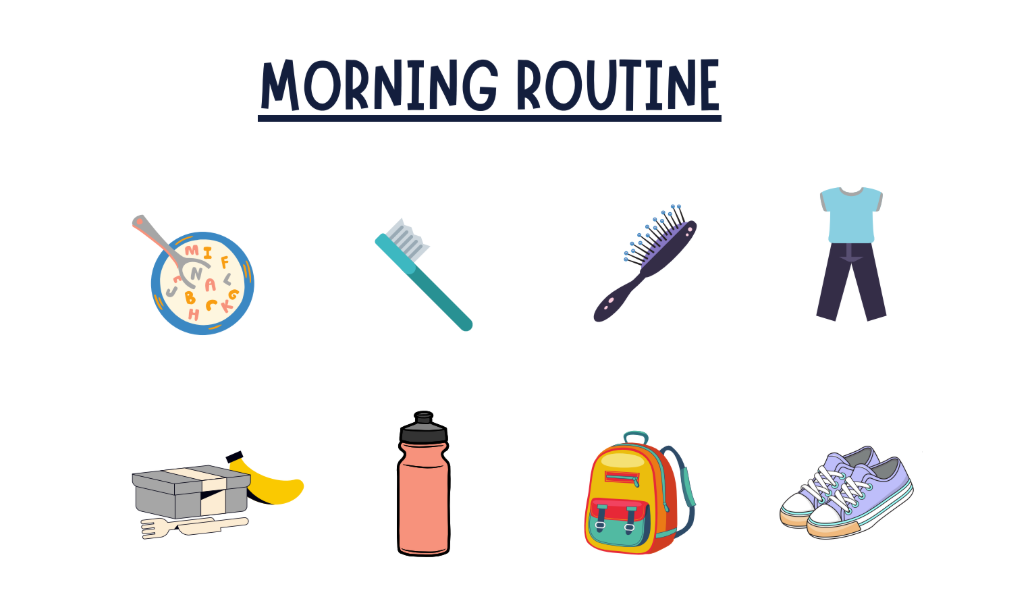 Example of a Visual Morning Routine
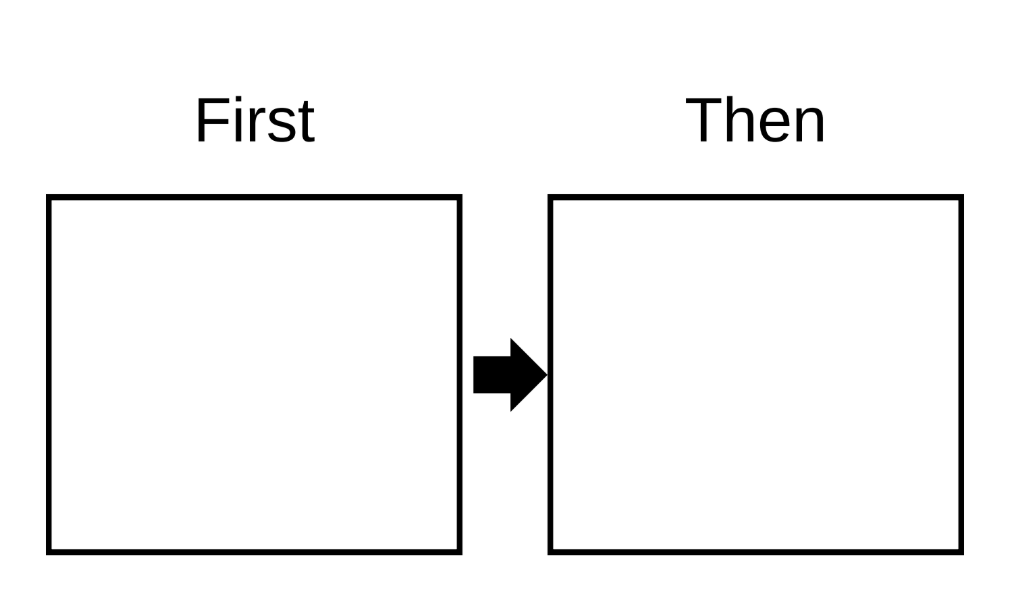 Example of first/then board
Choices give children a sense of belonging:
“Do you want to hop or walk to the door?”
“Would you like to carry your backpack or your water bottle?”
Transitions can be supported with reminders:
“Three more turns before we clean up.”
“Let’s sing the song one more time and then put our shoes on.”
Familiarity helps children feel safe. Visiting the school or playground together and noticing details can make the first day feel welcoming.
Explore the school or playground together.
Point out the Kindergarten area and say something like: “This is where you’ll be dropped off and picked up after school. I’ll be waiting for you with a big smile.”
Looking at photos of the school at home can continue the sense of comfort and familiarity.
You might also plan a small picnic in the schoolyard. Encourage your child to bring their lunch box in their backpack. This helps them practice routines they’ll use during the school day.
Frame each visit as an adventure: “Let’s explore the schoolyard today!"
Children thrive when the adults in their lives work as a team. You know your child best, and sharing what comforts and supports them helps build a strong bridge between home and school.
Let the classroom team know what helps your child feel ready to play and learn (e.g., a favourite toy).
Using similar language for routines at both home and school can give your child consistency.
Consider sharing with the school team how your child might get stuck or have a hard moment. Every child benefits from different things (some may need space, others may look for comfort, get frustrated, or become quiet). It’s also helpful to share the strategies you use at home that help your child feel seen, heard and understood.
Familiar items remind children of love and connection. These small bridges between home and school can ease the transition.
Some families find it helpful to send a small, meaningful item (like a stuffed animal or photo) that can stay in a backpack for reassurance.
Gentle reminders can support your child:
“This reminds you of home, and you can keep it safe in your backpack.”
“We carry love with us, even when we’re apart.”
“I will be at the gate at the end of the day, ready for a big hug.”
Schools will give families/caregivers a copy of the Playful Learning in Kindergarten book at the Kindergarten Information Sessions and/or the Discover Kindergarten event.
The Government of Ontario has also created Kindergarten resources to support your child’s learning at home, including ebooks to spark your child’s curiosity and joy of learning.
Families connected to Early Intervention Services (EIS)
For families who have services through Early Intervention Services, which may include Infant and Child Development Services, Inclusion Support Services and Preschool Speech and Language Services, the transition to school planning process starts early, usually one year before your child begins school. This proactive approach ensures a smooth entry and that necessary supports are planned ahead of time.
Learn more about York Region Early Intervention Services.
Partnering Together
Your voice matters in your child’s transition to Kindergarten. You are the expert on your child, and we look forward to learning from you. To help us understand your child’s strengths and needs, you may consider sharing documents (such as assessments or medical reports) and your own personal insights and stories about what your child enjoys, their strengths, needs, and information on how they learn best. The information you choose to share helps us to work together to coordinate the right supports and understand the “big” picture of your child’s experience as your child enters kindergarten.
This timeline outlines the typical flow of transition planning activities across the year prior to the start of Kindergarten. It is designed as a helpful reference tool for parents/caregivers to guide and support their planning.
Fall
Parents/caregivers are encouraged to complete the Transition to School Notification Report with your Early Interventionist
Consent to Share Information: Parents/caregivers can choose to sign the Consent Form to allow their Early Interventionist to share information about their child with the school board.
Winter
Register for Kindergarten at your home school. Registration begins in January.
Parents/caregivers may wish to inform the Principal and the school office that the child is participating in the Early Intervention Services (EIS) Program.
Sharing Information and Documentation: Parents/caregivers may wish to provide the Principal with copies of assessment reports and any relevant medical, developmental, or program information (e.g., Early Intervention Services).
- Attend the YRDSB & Early Intervention Services Family Information Evening to learn about the Kindergarten program and YRDSB’s special education services
Spring
Attend the school’s Kindergarten Information Session for parents/caregivers only to receive information about the program, ask questions and connect with the school.
Check with your home school for other events offered to new Kindergarten students and families.
Attend a Transition Meeting: If a meeting is scheduled for your child, join the school team to collaborate on a plan for school entry.
Summer
Explore Supportive Strategies and What to Expect in Kindergarten sections above for ideas and activities to engage your child prior to school entry.
Look for a School Start-Up Email: Keep an eye on your inbox for an email from your child’s school with important information (e.g., schedule, plan for first day, forms, transportation).
The Transition Meeting may offer an opportunity for parents/caregivers along with school staff, to exchange information and to collaborate on a plan of support for your child. It can be initiated by either the Principal or parents/caregivers and is typically held before school entry.
The purpose of the meeting is to ensure a common understanding of the child’s strengths and needs and the supports that will be available for entry to school. Families and school staff can share important information, like how the child is growing, learning, and what support they may need. By working together, the school and parents/caregivers can proactively plan for experiences and programs that will maximize the child’s strengths and create the right supports from the time of school entry.
Who might attend the meeting?
Parent/Caregiver(s) and the Child
School Principal or Vice-Principal
School staff (e.g., Designated Early Childhood Educator, Kindergarten teacher, Special Education Resource Teacher (SERT))
Personnel from EIS, York Region Preschool Speech and Language Services or Ontario Health at Home (*if the child has been receiving service, and parents/guardians have given their consent)
York Region District School Board Student Services staff (i.e. Speech-Language Pathologist (SLP), Physiotherapist or Occupational Therapist (PT/OT), Blind Low Vision Teacher(BLV))
What can be expected from the meeting?
Information is shared to establish a common understanding of your child’s growth, learning profile, and successful strategies from the child's early years.
A plan is created for programs and supports when the child starts Kindergarten.
A Pre-Entry Visit may be discussed or planned.
Families connected to Ontario Autism Program (OAP)
For families who have a child participating in the Ontario Autism Program’s Entry to School (ETS) program, planning for Kindergarten begins early. Families, service providers and schools work together to create a welcoming and engaging space where every child belongs.
Partnering Together
Partnering with the school in the transition process offers parents/caregivers a meaningful way to help shape a welcoming and inclusive start to kindergarten. As the expert on your child, you bring important knowledge and expertise to the planning process. This can include sharing both formal documentation (like assessments and medical reports) and personal insights into the child's strengths, needs, and supportive strategies. You may wish to tell your ETS Consultant and the School Principal if your child has any other specialized or ongoing services, or is attending other programs.
The information you choose to share helps us to work together to coordinate the right supports and understand the “big picture” of your child’s experience as they enter Kindergarten.
This timeline outlines the typical flow of transition planning activities across the year prior to the start of Kindergarten. It is designed as a helpful reference tool to guide and support your planning.
Winter
Register for Kindergarten at your home school. Registration begins in January.
- Parents/caregivers may wish to inform the Principal and the school office that the child is participating in the OAP Entry to School (ETS) Program.
Consent to Share Information: Parent/caregivers may choose to sign a consent form to allow the ETS Consultant to share information about your child with the school board. This form will be provided to you by the school. ents/caregivers may wish to inform the Principal and the school office that the child is participating in the OAP Entry to School (ETS) Program.
Sharing Information and Documentation: Parent/caregivers may wish to provide the Principal with copies of assessment report (e.g., Autism diagnosis, Psychology, Speech-Language Pathology, Occupational therapy reports) and any relevant program summaries from the ETS Team.
Spring
Attend the school’s Kindergarten Information Session (if offered) for parents/caregivers only to receive information about the program, ask questions and connect with the school.
Check with your home school for other events offered to new Kindergarten students and families.
Kindergarten Entry
School Board staff may ask to do a Pre-Entry Visit to observe your child at their ETS program site or at home.
The school team and ETS Consultant partner together to share what works for your child through the transition into Kindergarten.
The Transition Meeting may offer an opportunity for parents/caregivers along with school staff to exchange information and to collaborate on a plan of support for your child. It can be initiated by either the Principal or the parent/caregiver and is typically held before school entry.
Gathering together for a transition meeting allows you and the school team to build a shared understanding of how your child learns and thrives. By sharing important observations and information about what worked well during the Entry to School program, together the school and family team can plan for experiences and programs that will support a positive entry to Kindergarten.
Who might attend the meeting?
Parent/Caregiver(s) and the Child
School Principal or Vice-Principal
Entry to School (ETS) Consultant
School Staff (e.g., Designated Early Childhood Educator, Kindergarten teacher, Special Education Resource Teacher (SERT))
York Region District School Board Student Services Staff (e.g., Speech-Language Pathologist (SLP), Physiotherapist or Occupational Therapist (PT/OT), Special Education Consultant, Student Services Coordinator)
What can be expected from the meeting?
Information is shared to establish a common understanding of your child’s growth, learning profile, and successful strategies observed during the ETS program.
A plan is created for programs and supports when the child starts Kindergarten.
A Pre-Entry Visit may be discussed or planned.
Exploring School-Based Supports
Children grow and learn in many ways. Development continues to unfold over time. As Kindergarten approaches, families may have questions about what support might be helpful.
Partnering with the School
You do not need to be connected to a program or service to reach out. Families contact schools for many reasons, and support begins with a conversation. School staff can listen, answer questions and help guide next steps. If you would like to connect, you can reach out to your child’s home school (the school in your neighbourhood). You can find your home school using the School Locator.
Families know their children best. Your observations, questions, and experiences are an important part of supporting your child at school.
Families may choose to share:
what their child enjoys and is interested in
how their child approaches new situations
routines or strategies that work well
You decide what to share. This information helps school teams understand your child and think together about support.
As your child begins Kindergarten, families and school staff continue to connect and share information. By staying in communication, families and school teams can respond to your child’s growth and learning and adjust supports over time.
Related Content